
The Complete Guide to Better Sleep
Why modern life broke sleep, what the science actually says, and a protocol you can start tonight: the definitive guide, in eight minutes.
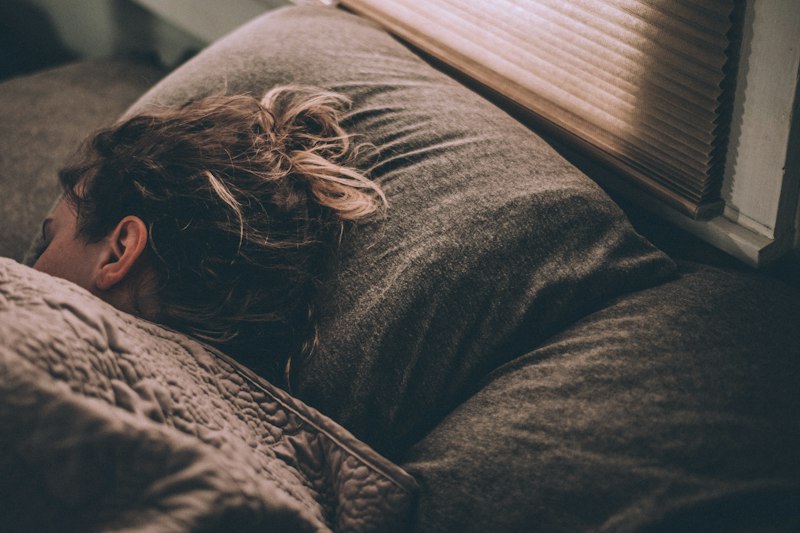
Somewhere in the last hundred years, sleep stopped being a given and became a project. Your great-grandparents did not optimize their sleep; they simply ran out of light and went to bed. Then came the electric bulb, the late shift, the television, the laptop, and finally the phone on the nightstand, each one an invention that quietly bid against your bedtime. The result is a world where a third of adults regularly sleep less than they need, and where being exhausted is treated as evidence of a full life rather than a warning light.
The strange part is that we did not decide to sleep less. Nobody sat down and chose exhaustion. It happened one small trade at a time: one more episode, one more scroll, one more email answered at midnight because the office now lives in your pocket. Sleep lost the auction night after night, not because it stopped mattering but because it is the only bidder that never advertises.
This guide is the case for taking the bid back. Not with hacks or gadgets, but with a working understanding of what sleep actually does, how the machinery runs, and a small set of practices with real evidence behind them. By the end you will know more about your own nights than most people ever learn, and you will have a protocol you can start this evening.
The stakes justify the effort. Run chronically short on sleep and your immune system dulls, your appetite hormones tilt toward hunger, your reaction time sags toward the range of a drink or two, and your mood loses its shock absorbers, so ordinary friction starts registering as catastrophe. Most insidious of all, sleep deprivation blunts the very self-awareness you would use to notice it: in lab studies, people restricted to six hours a night for two weeks performed steadily worse on every measure while reporting that they felt basically fine. You adapt to the feeling of exhaustion long before your brain adapts to the fact of it.
Start with what sleep is for, because it is not rest in any passive sense. The sleep scientist Matthew Walker, whose lab at the University of California, Berkeley has spent decades on this question, describes sleep as the price the brain pays for learning. During the day you collect experiences; during deep sleep your brain replays them, moving the important ones from fragile short-term storage into durable long-term memory. Skip the night and the filing never happens: Walker's research shows that both the night before learning and the night after it are load-bearing. Sleep prepares the brain to absorb, then seals in what was absorbed.
Sleep is also where feelings get processed. Walker calls dream-rich REM sleep a form of overnight therapy: the brain replays emotional experiences with the chemical volume turned down, so you can keep the memory while losing some of its sting. It is why everything genuinely does look worse at 2am after a short night, and a little more survivable after a full one.
As for the machinery, two systems run your sleepiness, a model first formalized by the sleep researcher Alexander Borbely as the two-process model. Process one is sleep pressure: from the moment you wake, a chemical called adenosine accumulates in your brain, and the longer you are awake the heavier the pressure grows, like sand filling an hourglass. Process two is your circadian rhythm, an internal 24-hour clock that decides when the body expects to be alert and when it expects to wind down, set each day mainly by morning light. When the two align, high pressure meeting the clock's night phase, sleep arrives almost by itself. Most modern sleep problems are one of these two systems being sabotaged: caffeine blocking the adenosine signal, or erratic schedules and late-night light confusing the clock.
It also helps to know the shape of a healthy night, because sleep is not one uniform state. You descend through light sleep into deep slow-wave sleep, then surface into dream-rich REM, and the whole cycle repeats roughly every ninety minutes. The mix shifts as the night goes on: deep sleep dominates the first half, REM the second. That arithmetic carries a sting. Cut a night short by a quarter and you do not lose a quarter of everything; you disproportionately lose the REM-rich final cycles, the very sleep doing the emotional processing. An alarm set two hours early is, in effect, aimed straight at your morning REM.
Quick quiz
You sleep five hours a night all week, then sleep in on the weekend. Is the debt repaid?
So what do you actually do with a bad night, or a run of them? The most effective behavioral tool in the sleep literature is also one of the oldest. In the 1970s the psychologist Richard Bootzin developed stimulus control therapy, built on a simple observation: for good sleepers, the bed is a cue for sleep, and for poor sleepers it has become a cue for worrying about sleep. Lie awake frustrated often enough and your brain learns the association, so that the very act of getting into bed now triggers alertness.
Bootzin's protocol retrains the cue. Use the bed only for sleep, not for scrolling, working, or watching. If you have been awake for roughly twenty minutes, get up, go to another room, and do something quiet and dull in dim light until you feel sleepy, then return. Repeat as often as needed, without drama. And hold your wake-up time fixed every day regardless of how the night went, because a stable wake time is the anchor the circadian clock sets itself by. The first few nights of this can feel worse, not better; the retraining works over weeks, not hours, and it is one of the best-supported insomnia treatments known.
Beneath the protocol sits a principle worth holding onto: sleep is the rare goal that retreats when pursued. You cannot force sleep the way you can force a workout; you can only arrange the conditions and let it come, and the harder you strain toward it, the more alert the straining makes you. This is why clock-watching is so corrosive: every glance converts the night into a performance review, with cortisol as the reviewer. Turn the clock face away, and when you catch yourself trying to sleep, quietly downgrade the goal to resting. Rest is achievable on demand, carries much of the recovery, and, left unwatched, has a way of turning into the real thing.
A word on naps, since they are the tool everyone reaches for after a bad night. Used well, a nap is a gift: twenty minutes in the early afternoon can restore alertness without grogginess. Used late or long, it quietly sabotages the coming night, because napping drains the very adenosine pressure you need to fall asleep at bedtime. The rule of thumb: keep naps short, keep them before mid-afternoon, and if nighttime insomnia is the problem you are trying to fix, skip them entirely for a few weeks so the pressure builds where it counts.
Check-in
How confident do you feel about tonight's sleep, right now?
Guided exercise
The evidence-based wind-down
Step 1 of 5
Set a closing time for the day
~1 minPick a moment roughly an hour before bed and treat it as the day's official close: work ends, the last email goes unanswered, the lights go down a notch. Sleep needs a runway, not a cliff edge.
Check-in
With a plan for tonight in hand: how confident about your sleep now?
Two everyday substances deserve their own paragraph, because they quietly undo more good sleep than any mattress can restore. Caffeine works by blocking adenosine receptors: it does not remove the sleep pressure, it hides it from you, and with a half-life of roughly five to six hours, a good share of your mid-afternoon coffee is still on duty at bedtime, shaving depth off your sleep even when you fall asleep fine. A cutoff around eight hours before bed is a reasonable default for most people.
Alcohol is the more deceptive of the two, because it genuinely does make you fall asleep faster. What it delivers afterwards is sedation rather than natural sleep: it fragments the night, suppresses REM in the first half, and tends to snap you awake in the small hours as it wears off. The nightcap trades a quicker start for a worse night, and the ledger never balances.
A note before you overhaul anything: this is general education about sleep, not medical advice. Individual needs vary, and questions about your own health, medication, or conditions like sleep apnea belong with a doctor.
Finally, know where self-help ends. If you have struggled to fall or stay asleep at least three nights a week for three months or more, that pattern has a name, chronic insomnia, and it deserves more than tips. The gold-standard treatment is cognitive behavioral therapy for insomnia, known as CBT-I: a structured program that combines stimulus control, sleep scheduling, and work on the racing thoughts that keep the night hostile. Clinical guidelines recommend it ahead of sleeping pills because its effects hold after the treatment ends.
Whatever you change, judge the results by the week, not by the night. Sleep responds to consistency the way fitness responds to training: no single session proves anything, and one rough night after starting a new routine means nothing at all. Give the wind-down and the fixed wake time two honest weeks, expect the improvement to arrive as a trend rather than a miracle, and resist the urge to track yourself into anxiety; a sleep diary of one line a morning tells you more than any gadget strapped to your wrist.
Persistent insomnia is common, treatable, and nothing to tough out alone. If your nights have been a battle for a while, raise it with your therapist, or start by talking it through with Milo: describing what your nights actually look like is the first step toward getting them back.